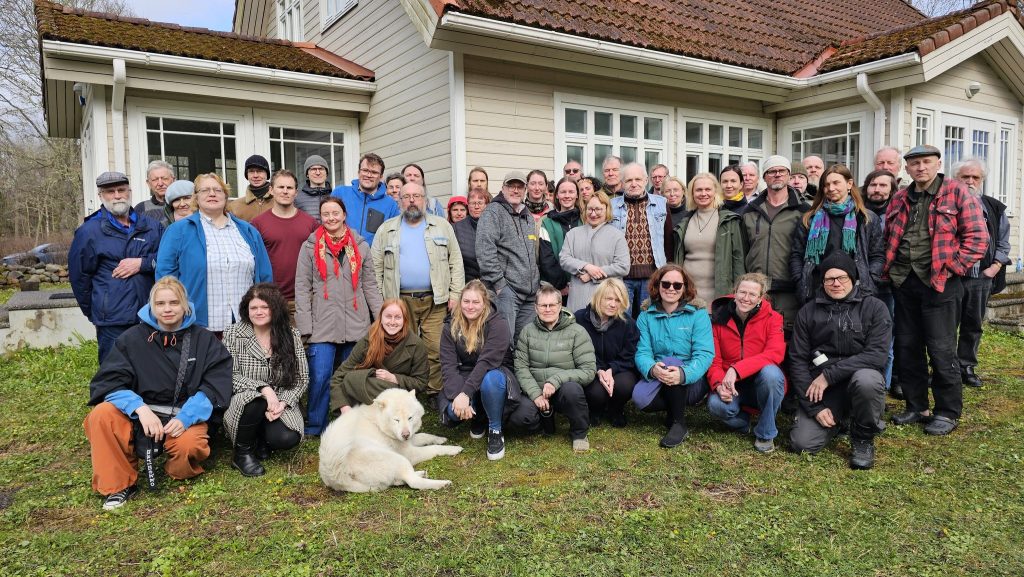
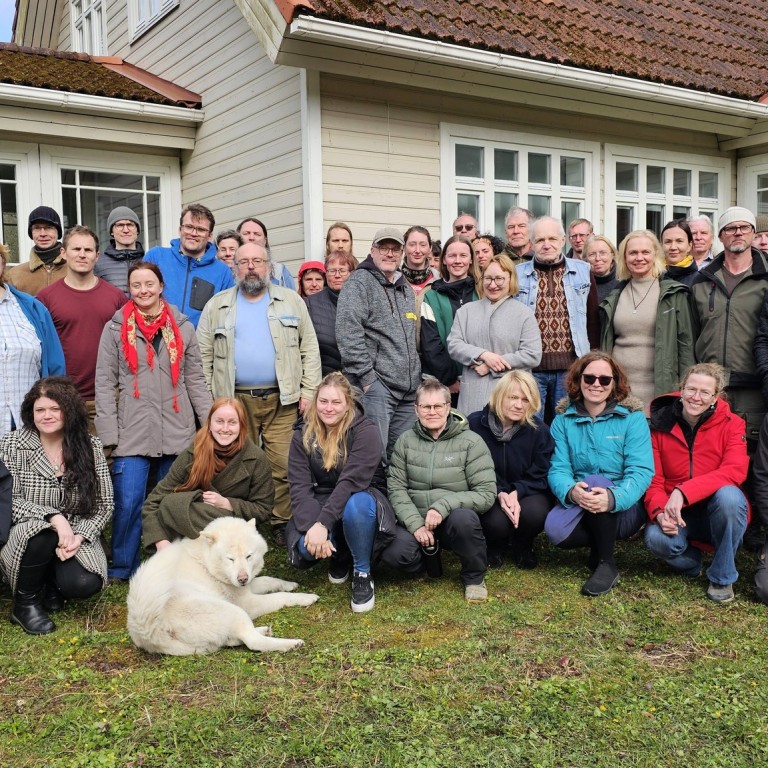
The 52nd Spring School, organized by the Theoretical Biology Section of the Estonian Society of Naturalists, took place at the Viidumäe Biological Station in Saaremaa from 24 to 26 April, bringing together scientists and thinkers to discuss the concept of semi-naturalness and its meaning. The three-day meeting focused on theoretical and philosophical approaches and offered presentations and discussions on topics increasingly concerning both the natural sciences and society as a whole.
What does “semi-naturalness” actually mean – where does the line between natural and unnatural run, and is such a division even relevant? What processes and mechanisms apply along these lines, and are they in any way different from those applied elsewhere? What biological consequences are caused by these areas of contact?
These were the most general topics of this year’s spring school, which were also discussed in the Vikerraadio program “Labor,” which covered the spring school. The program also raised the question of whether “semi-natural” is even an appropriate term, or whether we should instead talk about “co-naturalness,” which would emphasize the intertwining of humans and nature.
One of the participants in the discussion, Aveliina Helm, Professor of Restoration Ecology at the University of Tartu and head of the Landscape Biodiversity Workgroup, highlighted in an interview that the concept of semi-naturalness not only describes nature but also the role of humans in it. According to her, it helps to understand that “where nature passes into non-nature, semi-natural things are located,” and it is precisely these areas that need conscious treatment and preservation.
Helm also emphasized that the relationship between humans and nature is not black and white: “Perhaps co-natural is a better concept, as it refers to the need to see the environment as a holistic community, not as opposing categories.”
In addition to Helmi, several well-known scientists participated in the discussions, including biosemiotician Kalevi Kull and other researchers who discussed semi-naturalism from ecological, philosophical, and cultural perspectives.
The spring school articles collection (in Estonian), Schola Biotheoretica LII, will soon be available for online reading or purchase at the Estonian Society of Naturalists (Struve 2, Tartu).
The tradition of spring schools in theoretical biology goes back decades and has become an important place for the exchange of ideas, where different scientific disciplines and approaches meet. This year's meeting showed that understandings of nature and the role of humans in it are constantly changing and need constant rethinking.