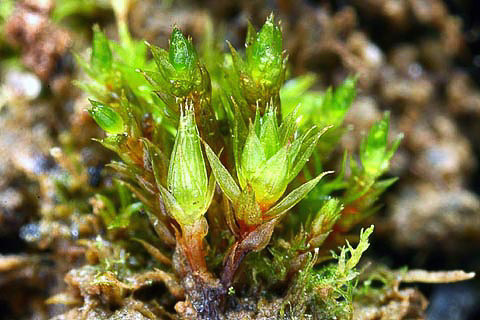
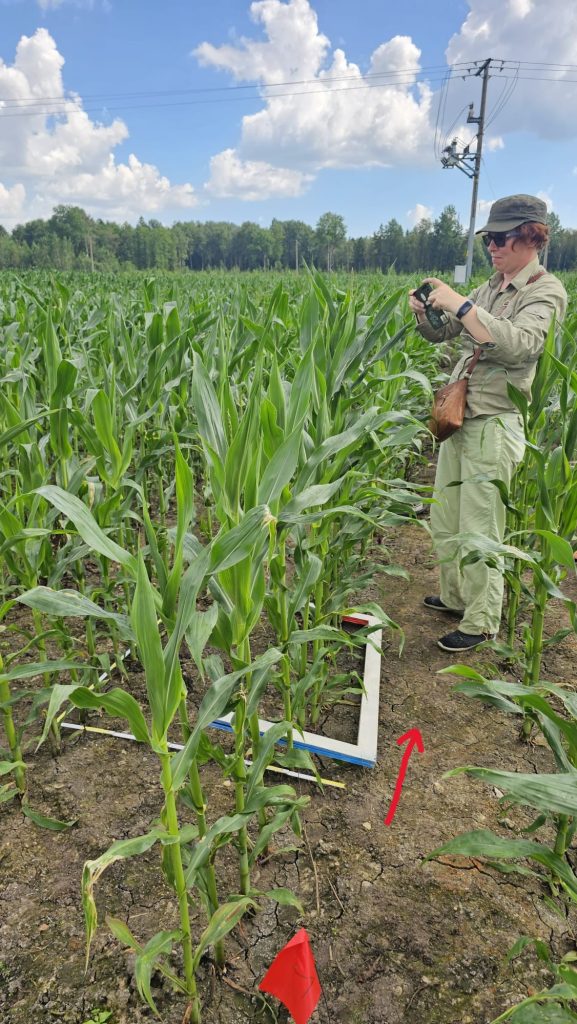
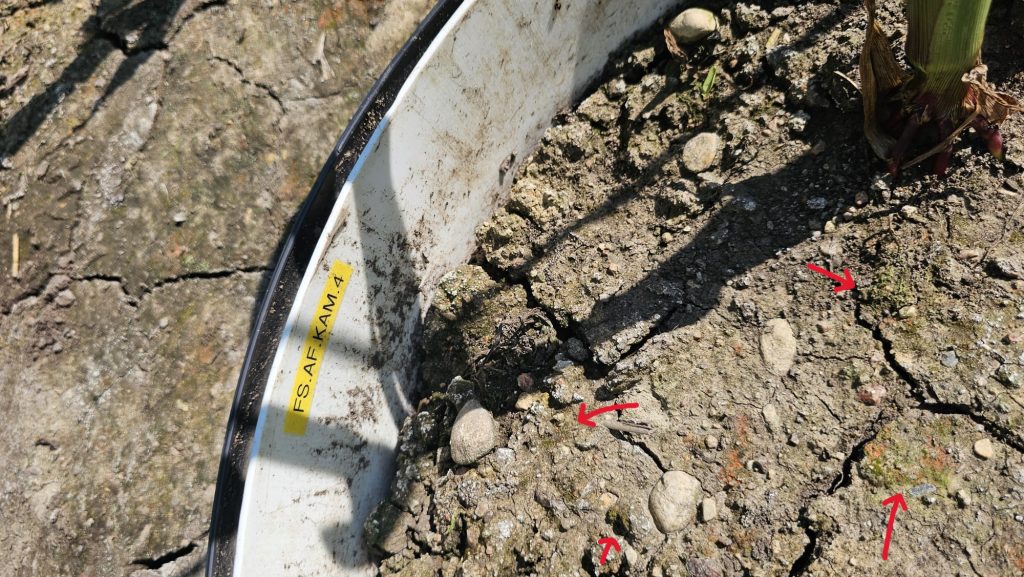
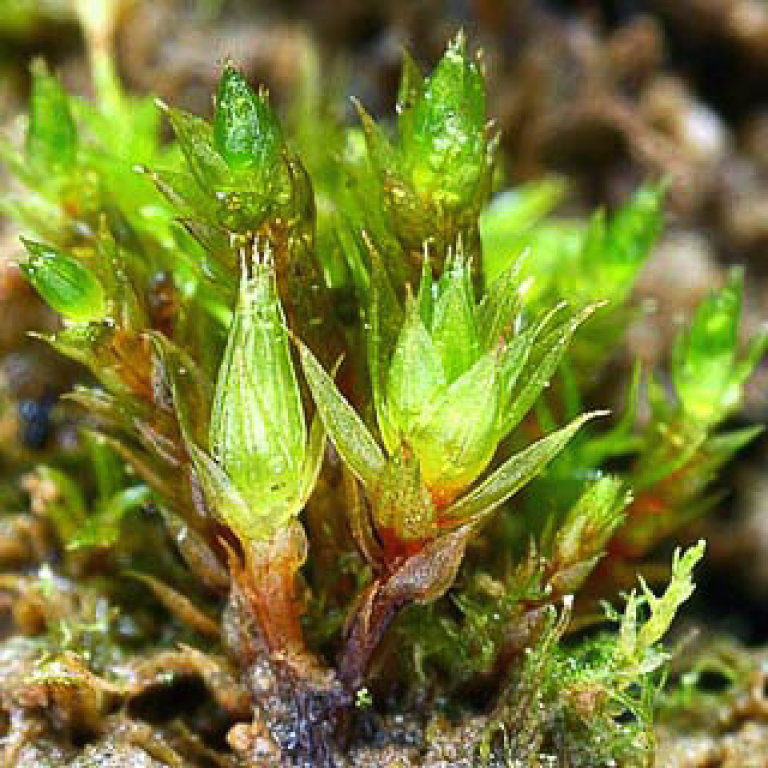
Last year, a moss species Bryum violaceum (also Gemmabryum violaceum), previously unregistered in Estonia and currently without an Estonian name, was found in the permanent observation area located in the Kämara field of the Center of Excellence for Sustainable Land Use (FutureScapes).
The moss species found by Aveliina Helm and Triin Reitalu is a tiny green moss that grows mainly on disturbed soils, such as fields and other trampled or cultivated areas. The species is characterized by the formation of numerous small, almost spherical rhizoid tubers (with a diameter of less than 60–90 micrometers). The plant's rhizoids remain in the soil and allow the moss to quickly start growing again after disturbance. The species is also found in Estonia's neighboring countries and its occurrence in Estonia was considered very likely, but so far it had not been found in Estonia despite previous searches.
A new moss species for Estonia was determined by bryologist Tiiu Kupper of the University of Tartu and the find has been entered into the Estonian natural science data information system PlutoF. A proof specimen is kept in the botanical collections of the University of Tartu Natural History Museum.
A total of 621 moss species have been recorded in Estonia.
Photos: Des Callaghan and Aveliina Helm